A contract translated into Arabic is often signed by both parties and may one day be read by a judge. Small mistakes that seem harmless in a draft, such as a name spelled in two ways or an amount written differently in figures and words, can become a dispute. These are the nine pitfalls we see most often when contracts are translated from Italian or English into Arabic, and how to avoid them.
1. Translating legal concepts word for word
Many terms have no exact equivalent. Concepts such as "force majeure", "penalty clause", "joint and several liability" or "withdrawal" need the term that a lawyer in the target country would use, not a literal rendering. When there is no real equivalent, the translator keeps the meaning and, if needed, adds the original term in brackets.
2. Inconsistent defined terms
Contracts define terms such as "the Supplier", "the Products" or "the Territory" and then repeat them dozens of times. If the Arabic text uses two different words for the same defined term, a reader may think they are two different things. A glossary for each contract, checked at the end, prevents this.
3. Names of parties and places spelled in different ways
Italian and English names can be written in Arabic in several ways. The name of a person or a company must be spelled the same way in the whole contract and match the spelling already used in passports, registry extracts or previous contracts. Send any existing Arabic spelling with the documents.
4. Amounts, figures and words that do not match
Contracts often state amounts in figures and in words. In Arabic, numbers written in words follow complex grammar rules, and figures can be written with Western digits (1, 2, 3) or Arabic-Indic digits (١، ٢، ٣). Each amount must be checked twice: the figure against the source and the words against the figure. The same applies to percentages, dates and deadlines.
5. Dates and calendars
Most commercial contracts use the Gregorian calendar, but the Hijri calendar is still used in some official documents, for example in Saudi Arabia. If a contract mentions both, the translation must keep the reference calendar clear and never convert dates without saying so.
6. No clause on the prevailing language
When a contract exists in two languages, it should say which version prevails in case of differences. In some countries the Arabic version is the one that counts before local courts and authorities. This is a decision for the lawyers, not for the translator, but a good translator will point out if the clause is missing.
7. A bilingual layout that does not match
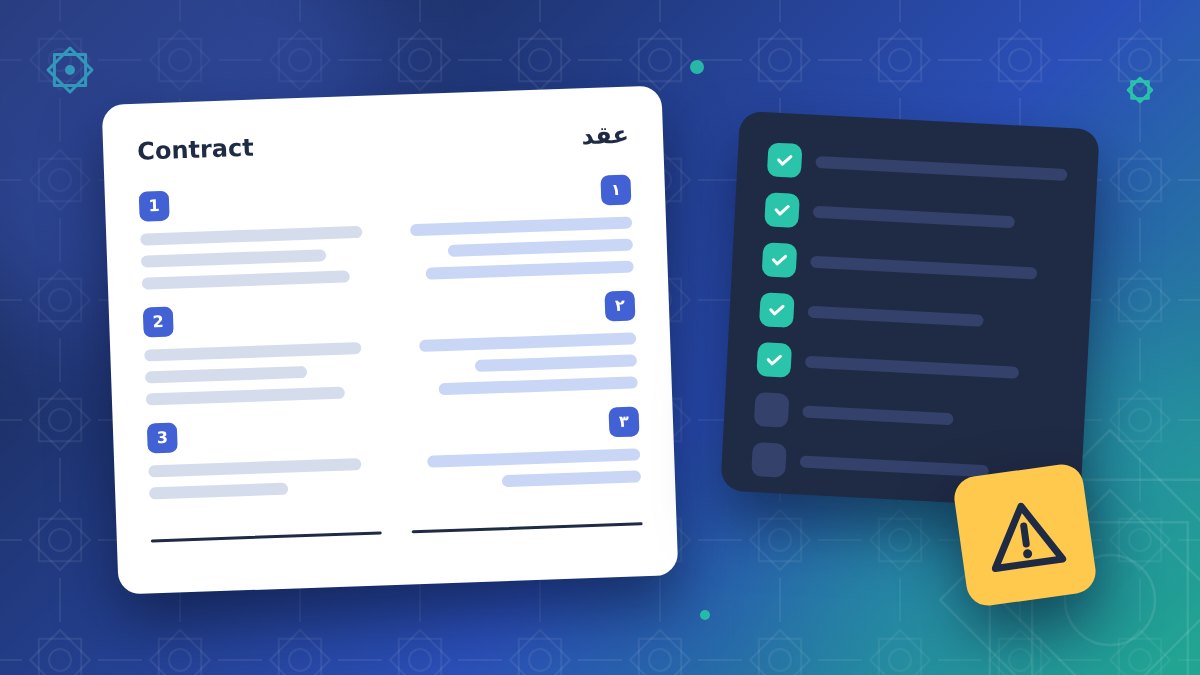
Two-column contracts are practical, but the Arabic column runs from right to left. Clause numbers, cross-references, tables and signature blocks must match line by line in both languages. Problems often appear when the original changes after the translation and only one column is updated. See also the 7 most common Arabic DTP mistakes.
8. Annexes, stamps and handwritten notes left out
Annexes, schedules, stamps, handwritten additions and initials are part of the contract. If they are not translated or at least described, the Arabic version is incomplete. Tell the translator whether they must be translated in full or only indicated, for example "[stamp of the company]".
9. Machine translation and uncontrolled sharing
Pasting a confidential contract into a free online translator can expose client data and usually produces errors in terminology and grammar that are hard to spot without native knowledge. Use a provider that works under confidentiality, with native legal translators and careful quality checks.
Checklist before signing
- Final version of the source text, with all annexes
- Glossary of defined terms and parties
- Names checked against official documents
- Every amount, date and percentage checked in figures and words
- Prevailing language clause agreed by the lawyers
- Bilingual layout checked clause by clause
- Final review of the Arabic text, also by a second linguist if needed
Read also our guide on legal translation into Arabic for law firms and notaries.
How we work
At Arabic Translators, native Arabic legal translators translate contracts directly from Italian and English, keep a glossary of defined terms for each client and check every name, number and date; on request, a second linguist revises the whole contract. We also deliver bilingual layouts ready for signature. Learn more about our legal translation into Arabic service or request a free quote.
FAQ
Can you translate only the changes in a new version of a contract?
Yes. With translation memory we identify the changed clauses and translate only the new text, which saves time and keeps the wording of the unchanged clauses.
Which digits should we use in an Arabic contract?
Both are correct. Western digits are common in the Maghreb and in many business documents, while Arabic-Indic digits are frequent in the Gulf and the Levant. The important thing is to use one system consistently.
Can you check an Arabic contract prepared by the other party?
Yes. We can compare it with the Italian or English version and report differences in content, names, numbers and dates.