For cosmetics and personal care products, the label is often the first contact with the customer and one of the first things the authorities check. In many Arab countries product information must also appear in Arabic, and a mistake on the label can stop a shipment at customs or force a costly reprint. This article explains which parts of the packaging usually need an Arabic translation and how to prepare them correctly.
What usually needs to be in Arabic
Requirements differ between countries and product categories, so always check them with your importer, distributor or a regulatory consultant for each market. In the Gulf countries, for example, cosmetics regulations require key label information in Arabic. In practice, the texts usually translated are:
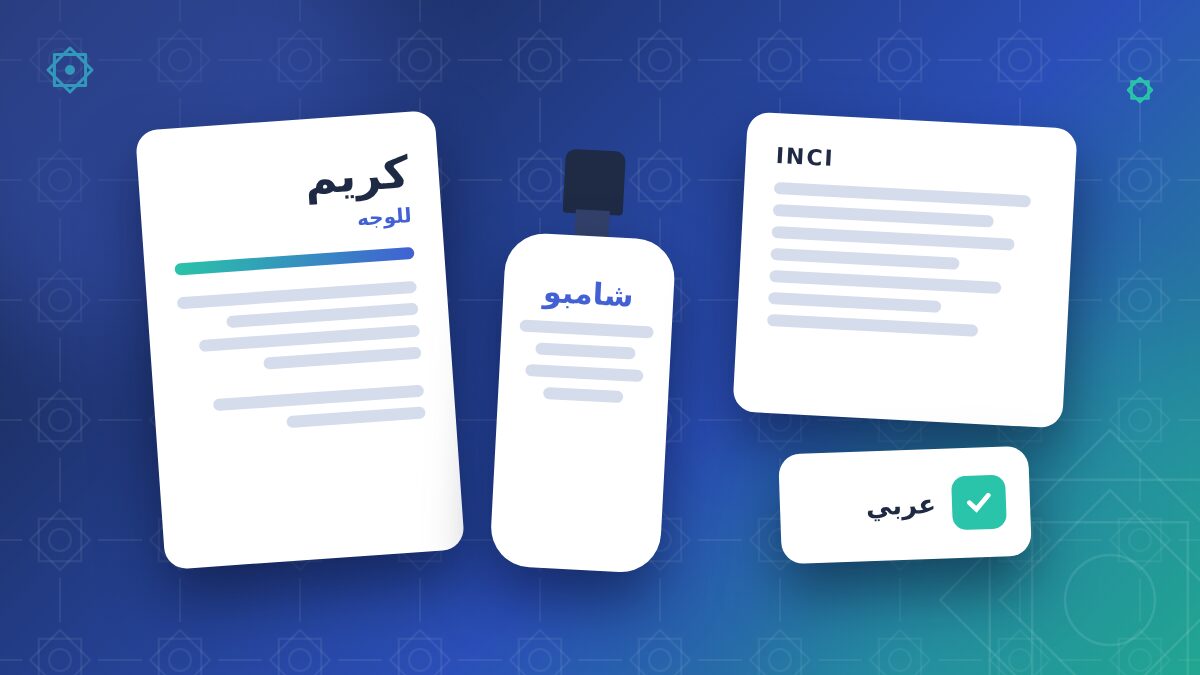
- Product name and product type (for example face cream or shampoo)
- Directions for use
- Warnings and precautions
- Net content, batch number and expiry or period after opening information, with the related wording
- Name and address of the manufacturer or importer
- Country of origin
- Storage conditions
What usually stays as it is
- The INCI list of ingredients, which is an international standard and is normally kept in its Latin form. Some markets may still ask for additional information in Arabic, so check the local rules.
- Brand names and trademarks
- Barcodes, batch codes and symbols such as the period after opening jar
Translating the label texts
Short texts, exact meaning
Label texts are short, so every word counts. Claims such as moisturizing, suitable for sensitive skin or dermatologically tested must be translated precisely and must say exactly what the product can prove. A translator who knows cosmetics terminology avoids words that promise more than the original.
Warnings
Warnings such as for external use only, avoid contact with eyes or keep out of reach of children must be clear and unambiguous. Use the same wording on all the products of the range.
Consistency across the range
Create a glossary with product types, claims and recurring sentences. This keeps the same terminology on the label, the box, the leaflet, the website and the online shop listings.
Layout: making Arabic fit on the pack
- Plan the space: Arabic text can be longer or shorter than the original, and the label often has to carry two languages.
- Use an Arabic font that stays readable at small sizes, and check the minimum text size required in the target market.
- Arabic runs from right to left, so the Arabic block needs its own alignment and reading order, also on bilingual labels.
- Keep numbers, units and codes in the right order inside Arabic sentences.
- Check the final artwork as a PDF, not only the text in a spreadsheet: broken or disconnected letters and missing characters are frequent errors after layout.
More details in our article on the 7 most common Arabic DTP mistakes.
Final checks before printing
- A native Arabic linguist checks the translation against the source and the glossary.
- The printer's proof is checked in Arabic: connected letters, line breaks and the reading direction.
- All numbers, quantities, dates and codes are verified.
- The importer or distributor confirms that the content matches the local requirements.
Quick checklist
- Requirements of the target country checked
- Texts to translate and texts to keep defined
- Glossary of product types, claims and warnings
- Space planned for Arabic on the pack
- Readable Arabic font at small size
- Final artwork checked by a native speaker
How we work
At Arabic Translators, native Arabic translators specialised in cosmetics translate labels, boxes, leaflets and product sheets, keep the terminology of your range consistent and prepare the Arabic artwork in the original format. Learn more about our cosmetics translation and Arabic DTP services or request a free quote.
FAQ
Is the INCI list translated into Arabic?
Normally not: the INCI names are international and stay in Latin characters. Check the local rules, because some authorities may ask for additional information.
Can you work directly on our label files?
Yes. Send the editable artwork (Illustrator, InDesign or PDF with editable text) and we deliver the Arabic version ready for the printer.
Do you check the regulatory requirements?
We translate and lay out the texts. The regulatory content should be confirmed by your importer, distributor or regulatory consultant for each market.
Which Arabic do you use on labels?
Modern Standard Arabic, which is understood in all Arab countries and is the standard for product information.