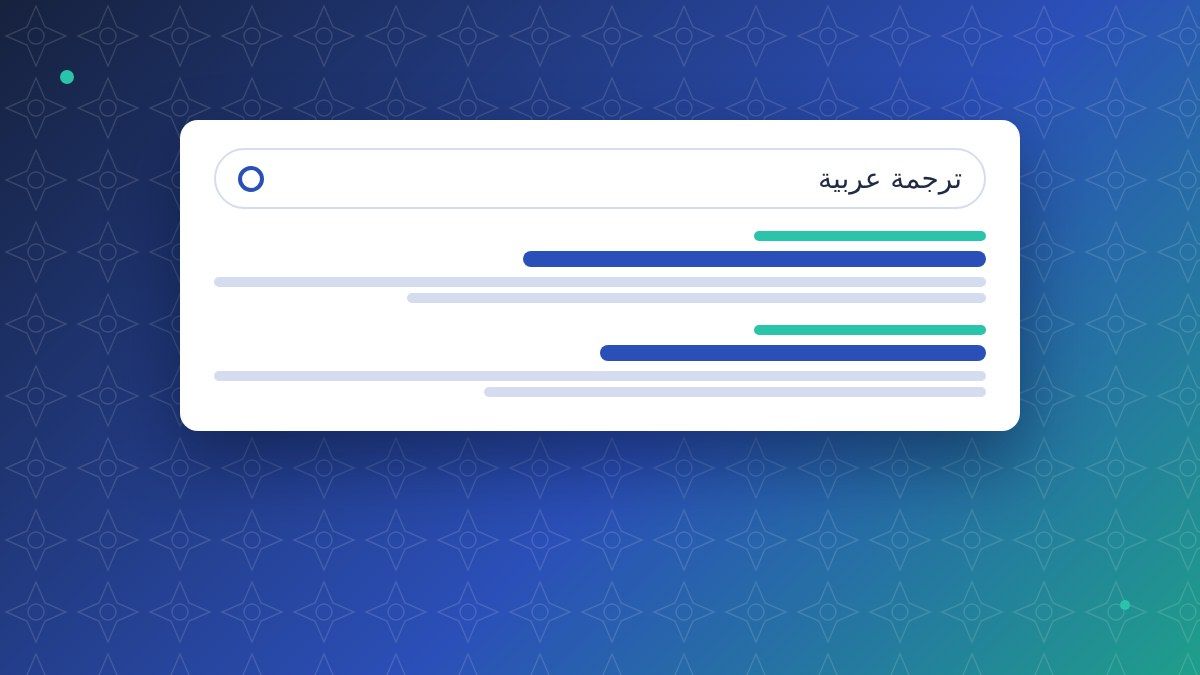
Translating a website into Arabic is not enough to be found by Arabic-speaking customers. People in the Arab world search in their own way: with different words, different spellings and sometimes in Latin letters. Arabic SEO starts with understanding these habits.
1. Do keyword research in Arabic
Translating your English or Italian keywords word for word often produces terms nobody searches for. Keyword research must be done directly in Arabic, with the help of a native speaker and of tools that show search volumes per country. The same product can have a different name in Morocco, Egypt and Saudi Arabia.
2. Spelling variants
Arabic words can be written in slightly different ways: with or without the hamza on alif (أ / ا), with ta marbuta or ha at the end (ة / ه), with alif maqsura or ya (ى / ي). Users often type the simplest form. Search engines handle many variants, but titles and headings should use the form your market searches for most.
3. Modern Standard Arabic or dialect?
Most websites use Modern Standard Arabic, which is understood everywhere. Searches, however, can contain dialect words, especially for everyday products and services. Use Modern Standard Arabic for the text, and include the most common local terms where they fit naturally. Read which Arabic for your market.
4. Searches in Latin letters and in English
Many users, especially in the Gulf and in technical sectors, also search in English or write Arabic with Latin letters. For B2B products it can be useful to keep English product names and model numbers in the Arabic pages, so they also match these searches.
5. URLs, titles and metadata
- Translate the title tag and the meta description, do not reuse the English ones
- Use short, readable URLs; Latin-letter URLs are easier to share, Arabic URLs can match searches better
- Set the language and the hreflang tags correctly for each version
- Translate image alt texts and file names where useful
6. Local signals
Prices in local currency, local contact details, delivery information and references to the right country help both users and search engines understand which market a page is for.
Checklist
- Keyword list researched in Arabic for each target country
- Spelling variants checked
- Titles, descriptions and headings written for Arabic searches
- hreflang and right-to-left settings in place
- Alt texts and URLs localised
- Results checked in Search Console per country
How we work
We translate and adapt websites into Arabic with keyword research done by native speakers, and we write titles and descriptions for Arabic search results. See our guide to Arabic website localization or request a free quote.
FAQ
Is Google the main search engine in the Arab world?
Yes, Google is by far the most used search engine in most Arab countries, so its guidelines for multilingual sites apply.
Should we create separate pages for each Arab country?
Only if prices, products or terms really differ. Otherwise one well-optimised Arabic version is usually better than several thin ones.
Can you translate our existing keywords?
We can, but we always check them against real Arabic search data, because literal translations often miss the terms people actually use.