
The Arabic Language
Arabic is used every day by more than 400 million people. It is an official language in more than 20 countries, from the Atlantic coast of Africa to the Gulf, and one of the six official languages of the United Nations. This guide explains where Arabic is spoken, how Classical Arabic, Modern Standard Arabic and the dialects differ, and what all this means when you need a translation or a right-to-left layout in Arabic.
Countries where Arabic is an official language
Arabic has official or constitutional status in the 22 member states of the Arab League and in Chad, where it is official together with French. In several countries it shares this status with other languages, as set out in the national constitutions.
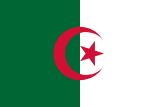
Algeria
North Africa (Maghreb)
Official: Arabic and Tamazight
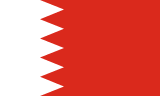
Bahrain
Gulf
Official: Arabic
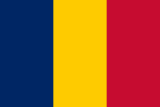
Chad
Central Africa
Official: French and Arabic
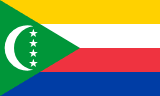
Comoros
Indian Ocean
Official: Comorian, French and Arabic
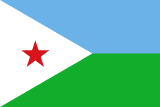
Djibouti
Horn of Africa
Official: Arabic and French
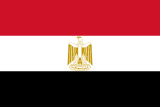
Egypt
Nile Valley
Official: Arabic
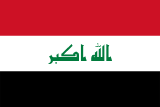
Iraq
Mesopotamia
Official: Arabic and Kurdish
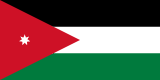
Jordan
Levant
Official: Arabic
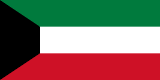
Kuwait
Gulf
Official: Arabic
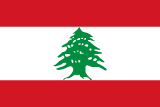
Lebanon
Levant
Official: Arabic (use of French set by law)
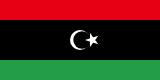
Libya
North Africa
Official: Arabic
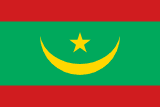
Mauritania
North-West Africa
Official: Arabic; national: Pulaar, Soninke, Wolof
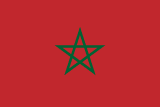
Morocco
North Africa (Maghreb)
Official: Arabic and Tamazight
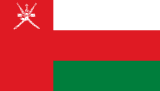
Oman
Arabian Peninsula
Official: Arabic
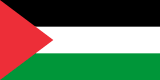
Palestine
Levant
Official: Arabic
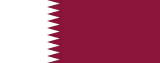
Qatar
Gulf
Official: Arabic
Saudi Arabia
Arabian Peninsula
Official: Arabic
Somalia
Horn of Africa
Official: Somali; Arabic is the second language
Sudan
Nile Valley
Arabic, with English as official working language
Syria
Levant
Official: Arabic
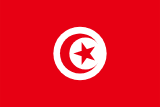
Tunisia
North Africa (Maghreb)
Official: Arabic
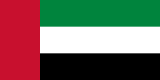
United Arab Emirates
Gulf
Official: Arabic
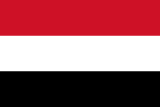
Yemen
Arabian Peninsula
Official: Arabic
Arabic is also used beyond these borders. In Mali, for example, Hassaniya Arabic is one of the 13 national languages recognised under the 2023 constitution.
Classical Arabic, Modern Standard Arabic and the dialects
Arabic is a Semitic language. When people say "Arabic", they may mean three different things: the classical language, the modern written standard, or the spoken variety of a region.
Classical Arabic
Classical Arabic is the language of the Quran and of most pre-modern literature, with roots in pre-Islamic poetry such as the Mu'allaqat, the seven famous odes of the 6th century. Because of the Quran, its written form has remained remarkably stable for centuries.
Modern Standard Arabic (MSA)
Modern Standard Arabic keeps the grammar of Classical Arabic with a modernised vocabulary and style. It is the language of books, newspapers, official documents, education and formal news broadcasts, and the written standard shared by the whole Arab world.
Spoken varieties
Every region has its own spoken Arabic, learned at home and used in daily life. Nearby varieties are usually mutually intelligible, while distant ones often are not: a speaker from Morocco and one from Iraq may struggle to understand each other's dialect.
The main groups of spoken Arabic
- Maghrebi: Morocco, Algeria, Tunisia and Libya, with influences from Berber, French, Spanish and Italian. Hassaniya, spoken in Mauritania, is often grouped here.
- Egyptian and Sudanese: the Nile Valley. Egyptian Arabic is widely understood thanks to Egyptian film, radio and television.
- Levantine: Lebanon, Syria, Jordan and Palestine.
- Mesopotamian: Iraq and north-eastern Syria.
- Peninsular: the Arabian Peninsula, including Gulf, Najdi, Hejazi and Yemeni Arabic.
Diglossia: two registers in one language
Most Arabic speakers live with two forms of their language. Modern Standard Arabic is learned at school and used for writing, broadcasting and formal speech; the local variety is used at home, with friends and in everyday conversation. Speakers often switch between the two, sometimes in the same sentence.
For translation this has a clear consequence: written texts are normally translated into Modern Standard Arabic, while the dialect is mainly a spoken language.
Which Arabic do you need?
The right choice depends on your text, your readers and the country you are addressing. These are the points we check with you before we start.
Documents, manuals and contracts
Use Modern Standard Arabic. It is understood and accepted in every Arab country, so one translation can serve readers in Riyadh, Cairo and Casablanca alike.
Marketing, subtitles and voice-over
Here tone and word choice matter most. Tell us the target country and we adapt the wording to that market, so your message sounds natural to the people you want to reach.
Regional terminology
Everyday and technical vocabulary can differ between the Gulf, Egypt, the Levant and the Maghreb, where French has influenced many terms. We choose words that suit your audience and keep them consistent in a glossary.
Numerals
In the Maghreb, Western digits (0123456789) are the norm. In much of the Middle East, Arabic-Indic digits (٠١٢٣٤٥٦٧٨٩) are used, often side by side with Western digits (W3C). We follow the convention of your market.
Dates and the Hijri calendar
Dates may follow the Gregorian or the Islamic (Hijri) calendar. Saudi Arabia, for example, adopted the Gregorian calendar for most government business in 2023, while keeping the Hijri calendar for matters governed by Islamic law. We keep the calendar of your source text and convert dates only on request.
Names, units and addresses
Arabic names can be written in Latin script in several ways (Mohammed, Muhammad, Mohamed). Tell us the spelling used in passports or earlier documents and we use it everywhere. We also check measurements, currencies and address formats for the target country.
The Arabic script
The Arabic alphabet has 28 letters and is written from right to left. It is an abjad: the letters represent consonants, while alif, waw and ya also mark the long vowels. Short vowels and some grammatical endings can be shown with small diacritical marks (harakat), but in most everyday texts they are left out.
Arabic is cursive, also in print. Most letters join the next one, and each letter changes its shape depending on its position: standalone, initial, medial or final. The same script, in the Nastaliq style, is used today for Persian, Dari, Pashto and Urdu.
Calligraphy styles
- Kufic: angular and monumental, used for early copies of the Quran and for inscriptions.
- Naskh: a flowing cursive script and the direct ancestor of modern Arabic writing; still among the most popular.
- Thuluth: an elegant decorative style, often used for titles and architecture.
- Maghribi: developed in Spain and North Africa, with long horizontal strokes and wide final curves.
- Diwani: the ornate script of the Ottoman chancellery.
- Nastaliq: a blend of naskh and taliq, the classic style of Persian literary works.
Source: Britannica, Arabic calligraphy.
Arabic DTP and right-to-left layout
Translating the words is only half of the job. Arabic text has to be set correctly on the page, and that requires software, fonts and know-how that a European layout does not need. We give it particular care.
Right-to-left mirroring
When Arabic is the main language, the whole page runs from right to left, not just the lines of text. Page order, columns, tables, timelines, icons with a direction and navigation are mirrored, and Arabic paragraphs are normally right-aligned (W3C Arabic layout requirements).
Arabic fonts and letter joining
Arabic letters join and change shape by position, so you need fonts that really support Arabic and a layout engine that shapes the text correctly. Otherwise words break into isolated letters or ligatures are lost, a typical error when Arabic is pasted into software that does not handle it.
Kashida and justification
Justified Arabic text is not only spaced out: lines can be lengthened by extending the connection between joined letters (kashida). Used with care at selected joins, it keeps the text colour even; overused, it makes the page look uneven (W3C).
Bidirectional text
Numbers, even in Arabic-Indic digits, are written from left to right inside Arabic text, and so are Latin brand names, product codes, units and e-mail addresses. Spaces and punctuation between them take their direction from the context, so mixed lines must be checked one by one.
InDesign and Illustrator workflows
We work in Adobe InDesign and Illustrator with Arabic support (often called ME, Middle Eastern, setups): right-to-left paragraph and story direction, the World-Ready Composer, kashida justification, Arabic digit types and ligatures (Adobe).
Print-ready PDF, checked by native speakers
We insert the Arabic text into your InDesign, Illustrator or other files and deliver packaged files and print-ready PDFs, on Windows or Mac. Every page is checked by native Arabic professionals before delivery.
One partner for translation and layout
When the same team translates and lays out your Arabic text, line breaks, hyphenation, text length and mixed Arabic-Latin lines are solved together, without corrections going back and forth between translator and designer. Brochures, catalogues, packaging, manuals and presentations come back ready to print or publish.
Read more about Arabic DTP and layout and about all our translation services.

Arabic in the world
Arabic is used every day by more than 400 million people. It is a language of international institutions, of a world religion and of a long scientific tradition.
Official language of the UN and FAO
On 18 December 1973, with resolution 3190 (XXVIII), the UN General Assembly made Arabic an official and working language of the Assembly and its Main Committees; it is one of the six official languages of the United Nations. The Food and Agriculture Organization (FAO) had already added Arabic to its official languages in 1971.
World Arabic Language Day
Every year on 18 December, since 2012, the UN and UNESCO celebrate Arabic on the anniversary of that decision. UNESCO recalls the role Arabic played in passing on Greek and Roman science and philosophy to Renaissance Europe.
The language of the Quran
The Quran is written in Arabic, the sacred and liturgical language of Islam. Muslims all over the world recite Quranic verses in Arabic in their daily prayers, also in countries where Arabic is not spoken.
Arabic words you already use
Many words in English and Italian come from Arabic, often through Medieval Latin, Spanish, Italian or Turkish:
- algebra: from al-jabr, in the title of a 9th-century treatise by the Baghdad mathematician al-Khwarizmi
- zero: from sifr (empty), through Medieval Latin zephirum and Italian zero
- sugar, Italian zucchero: from sukkar
- coffee, Italian caffè: from qahwa, through Turkish kahve
- cotton, Italian cotone: from qutn, through Old Italian
- magazine: from makhzan (storehouse)
- lemon: from laymun
- alcohol: from al-kuhl, a powdered antimony once used as eye paint
Sources: Merriam-Webster, Online Etymology Dictionary.
Arabic translation by native professionals
Arabic Translators works with native, mother-tongue Arabic professionals who translate full time, and has more than twenty years of experience. We translate from Arabic into Italian, English, German, French and Persian, and from these languages into Arabic.
Our translators use CAT tools and project glossaries for consistent terminology, and we deliver right-to-left layouts ready for print or online use. Send us your files and you will receive a free, non-binding quote with price and delivery date.
The Arabic language: frequently asked questions
What is the difference between Classical Arabic and Modern Standard Arabic?
Classical Arabic is the language of the Quran and of classical literature. Modern Standard Arabic keeps essentially the same grammar with a modernised vocabulary and style, and is the written standard used today in books, newspapers, official documents and formal broadcasts.
In how many countries is Arabic an official language?
Arabic has official or constitutional status in the 22 member states of the Arab League and in Chad, where it is official together with French. In several countries it shares this status with other languages, such as Kurdish in Iraq, Tamazight in Algeria and Morocco, and French in Djibouti and the Comoros.
Which Arabic should I use for my website?
For a website addressed to several Arab countries, Modern Standard Arabic is the safest choice, because it is understood and accepted everywhere. If your site targets a single market, tell us and we adapt vocabulary, numerals and date formats to that market.
Is Arabic written from right to left, including numbers?
Arabic text is written from right to left, but numbers keep their left-to-right order, with the highest digit on the left. Pages that mix Arabic with numbers or Latin text therefore need correct bidirectional (RTL) handling.
Do you translate into a specific Arabic dialect?
We translate into Modern Standard Arabic, the written standard of the Arab world. When requested, we adapt wording and conventions for the target market, for example the Gulf, Egypt or North Africa.
Which languages do you translate Arabic from and into?
We translate from Arabic into Italian, English, German, French and Persian, and from these languages into Arabic.
Sources
- United Nations - Arabic Language Day
- UN Digital Library - General Assembly resolution 3190 (XXVIII)
- UNESCO - World Arabic Language Day
- FAO - Arabic as an official language of the Organization (1971)
- Constitute Project - constitutional provisions on official languages
- UK Government - Mali toponymic factfile
- Britannica - Classical Arabic language
- Britannica - Arabic alphabet
- Britannica - Arabic calligraphy
- Britannica - Qur'an
- Britannica - Al-Mu'allaqat
- W3C - Arabic and Persian Layout Requirements
- W3C Arabic Layout Task Force - Arabic numerals
- Adobe - Arabic and Hebrew features in InDesign
- Adobe - Justify Arabic text with kashidas in InDesign
- Arab News - Saudi Cabinet approves Gregorian calendar for official business
- Merriam-Webster - Common words from Arabic
- Online Etymology Dictionary - algebra